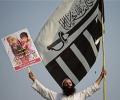
Tightening its noose around the Lashkar-e-Tayiba, the United States has added its affiliates, including the Jamaat-ud-Dawa, to its list of designated terror organisations and slapped sanctions against two Pakistan-based LeT leaders.

Prime Minister Narendra Modi on Saturday welcomed a host of world leaders, including United States President Joe Biden and United Kingdom Prime Minister Rishi Sunak, at the Bharat Mandapam, the venue of the G20 Summit.

"We condemn the Ahmedabad bomb blasts. Gujarati Muslims want peace. We are a business-oriented people and we believe that peace must be maintained. Muslims of Gujarat are not at all involved in any terrorist activities," said Saeed Umarjee, son of Hussein Umarjee prime accused in the Godhra carnage of 2002, in which 59 people were killed. Since 2003, Hussein Umerjee is in Sabarmati jail with 85 other accused.

Sonakshi gets up close and personal... Anil parties in Germany...
"I don't have any words to describe our plight in the last nine years. My Ammi (mother) says if Islam allows suicide she would like to end her life," says Saeed Omerjee, son of Maulvi Omerjee, one of the main accused in the Godhra train burning case.
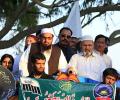
The recent sanctions imposed by the US on Lashkar front organisation Jamaat-ud-Dawa completely expose Pakistan that has consistently maintained that JuD is a charity organisation. The ban will also limit the donations to JuD, a major chunk of which is pumped into terror funds. Vicky Nanjappa reports.

From a Pakistan-trained militant to one of the prominent separatist faces in Kashmir, life has come a full circle for chief of the banned Jammu and Kashmir Liberation Front (JKLF) Yasin Malik, who was in limelight for varied reasons over the past three decades of turmoil in the erstwhile restive border state.

Pearl, the 38-year-old South Asia bureau chief for The Wall Street Journal, was abducted and beheaded while he was in Pakistan investigating a story on the alleged links between the country's powerful spy agency Inter-Services Intelligence and Al Qaeda.

The action against the two journalists came as a privately-owned television station in the Maldives went off the air, citing threats during the country's current state of emergency.
